
Home Inspection Contingency: How It Protects Tennessee Buyers
A home inspection contingency lets a buyer negotiate repairs or cancel if an inspection finds problems. How it works and how it differs from an appraisal.
A home inspection contingency is a clause in a purchase contract that makes the sale depend on a satisfactory inspection of the home, and it gives a buyer a way to negotiate repairs or walk away if the inspection turns up serious problems. The Consumer Financial Protection Bureau recommends making a purchase offer contingent on both financing and a satisfactory inspection, so that a buyer is not contractually required to buy a home with serious flaws.
What a home inspection contingency does
The National Association of Realtors describes an inspection contingency as one that gives buyers time to have a professional inspection, so they understand the condition of the home and can possibly negotiate for repairs before closing. In some areas, additional inspections, such as for termites, are common.
According to the CFPB, if a purchase contract is contingent on a satisfactory inspection, the buyer has the right to cancel the sale without penalty if not satisfied with the results. If repairs are needed, the buyer can instead negotiate with the seller to have them fixed before moving in or to receive a credit for the cost. The CFPB notes that, depending on the contract and local market conditions, a seller may or may not agree to pay for repairs.
The details, including the deadline to inspect and how a buyer must give notice, are set by the contract itself, so a buyer should read those terms before signing.
Why a home inspection is not the same as an appraisal
A lender generally requires an appraisal, which estimates the home's value for the loan. It does not replace an inspection. HUD's notice to FHA borrowers, "For Your Protection: Get a Home Inspection," says an inspection will only occur if the buyer arranges one, that FHA does not perform home inspections, and that FHA does not guarantee the value or condition of the home.
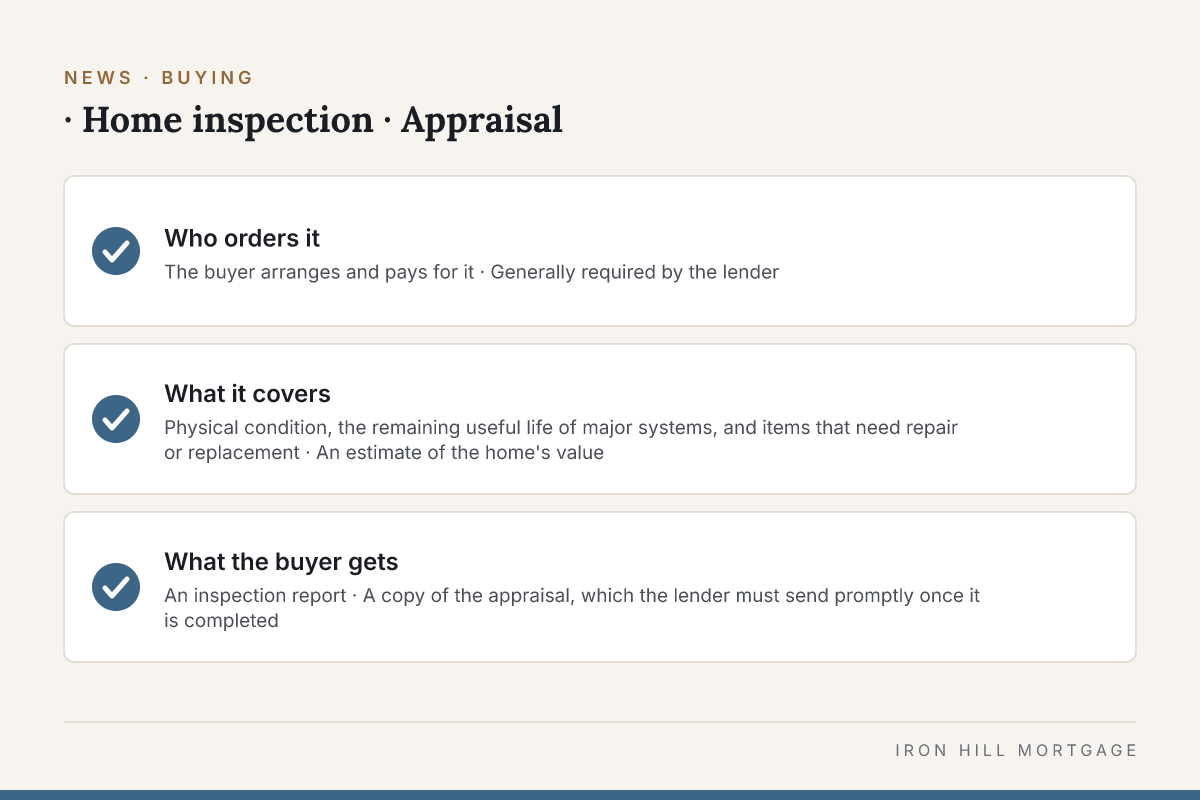
| Home inspection | Appraisal | |
|---|---|---|
| Who orders it | The buyer arranges and pays for it | Generally required by the lender |
| What it covers | Physical condition, the remaining useful life of major systems, and items that need repair or replacement | An estimate of the home's value |
| What the buyer gets | An inspection report | A copy of the appraisal, which the lender must send promptly once it is completed |
Sources: HUD form HUD-92564-CN; Consumer Financial Protection Bureau.
The two can overlap at closing. The CFPB says some loan programs require a property to meet specified standards, and if major repairs such as a new roof are needed, a lender can require them before closing or ask the buyer to set aside money for them. Iron Hill Brief's guide to mortgage appraisal rights covers what a buyer can do when an appraisal raises questions.
Choosing a home inspector in Tennessee
The CFPB says the inspection should be scheduled as soon as possible after choosing a home, so there is time to resolve problems or order additional inspections, and that buyers should choose an independent inspector who is accountable to them. It also suggests attending the inspection to make the report easier to understand.
Tennessee licenses home inspectors through the Department of Commerce and Insurance's Home Inspector Licensing Program, created in 2005. To be licensed, an inspector must complete 90 hours of commissioner-approved training, pass the National Home Inspector Examination and carry general liability insurance of at least $500,000 plus errors and omissions coverage. HUD's notice also suggests asking an inspector for a sample report or standards of practice, notes that the Environmental Protection Agency and the Surgeon General recommend radon testing for all homes, and suggests asking whether other health and safety tests, such as for mold, are relevant for the home.
Repair requests found in an inspection are one place buyers and sellers negotiate. Iron Hill Brief's report on seller concessions covers how buyers are trading price cuts for closing cost help, and its explainer on the Closing Disclosure three-day rule covers the final step before closing.
Frequently asked questions
Can I cancel a home purchase after the inspection? If the purchase contract is contingent on a satisfactory inspection, the CFPB says the buyer has the right to cancel without penalty if not satisfied with the results. The contract's deadlines and notice terms still apply.
Does an FHA appraisal count as a home inspection? No. HUD says an appraisal estimates the home's value for the lender and does not replace a home inspection, and FHA does not perform inspections.
Do Tennessee home inspectors need a license? Yes. Tennessee's Home Inspector Licensing Program requires training, a national exam and insurance for licensure.
Sources
- Consumer Financial Protection Bureau, "Schedule a home inspection" (page last modified Dec. 12, 2024; accessed Oct. 29, 2026): https://www.consumerfinance.gov/owning-a-home/close/schedule-a-home-inspection/
- Consumer Financial Protection Bureau, "Find the right home" (accessed Oct. 29, 2026): https://www.consumerfinance.gov/owning-a-home/explore/find-the-right-home/
- U.S. Department of Housing and Urban Development, Federal Housing Administration, "For Your Protection: Get a Home Inspection," form HUD-92564-CN (02/09/2023; accessed Oct. 29, 2026): https://www.hud.gov/sites/dfiles/OCHCO/documents/92564-CN.pdf
- National Association of Realtors, "Consumer Guide: Real Estate Sales Contract Contingencies" (accessed Oct. 29, 2026): https://www.nar.realtor/the-facts/consumer-guide-real-estate-contract-contingencies
- Tennessee Department of Commerce and Insurance, Home Inspector Licensing Program, "Home Inspector" (accessed Oct. 29, 2026): https://www.tn.gov/commerce/regboards/homeinsp/license/get/home-inspector.html