
Buying Rental Property in an LLC in Tennessee: Loans, Fees and Taxes
Buying rental property in an LLC in Tennessee affects which loans fit, what the state charges each year and which business taxes apply. What to check.
Buying rental property in an LLC in Tennessee is a common choice for investors who want the property held apart from their personal assets, but the decision affects more than the deed. It changes which loan programs fit, adds state filing fees every year and brings the company under Tennessee's franchise and excise taxes.
Why conventional loans usually close in a person's name
Fannie Mae purchases conventional loans made to borrowers who are natural persons, with limited exceptions such as inter vivos revocable trusts and certain land trusts, according to its Selling Guide. Borrowers establish their ownership interest by signing the note and taking title in their own names.
Fannie Mae's refinance rules show the same line from the other direction. A limited cash-out refinance can pay off a loan on a property currently owned by an LLC that the borrower majority owns or controls, but ownership must be transferred into the name of the individual borrower.
Buying rental property in an LLC in Tennessee with a DSCR loan
Business-purpose loans are where an LLC more often fits. Iron Hill's overview of DSCR loans notes that these programs can close in an investor's own name or in an LLC or other entity, and that many programs also require a personal guarantee. A debt service coverage ratio loan qualifies the property largely on its rent compared with its debt payments, which the Iron Hill Brief's DSCR loan Tennessee guide walks through county by county.
Lenders that lend to entities generally review the company's formation documents and who owns and controls it, and requirements vary by lender and program.
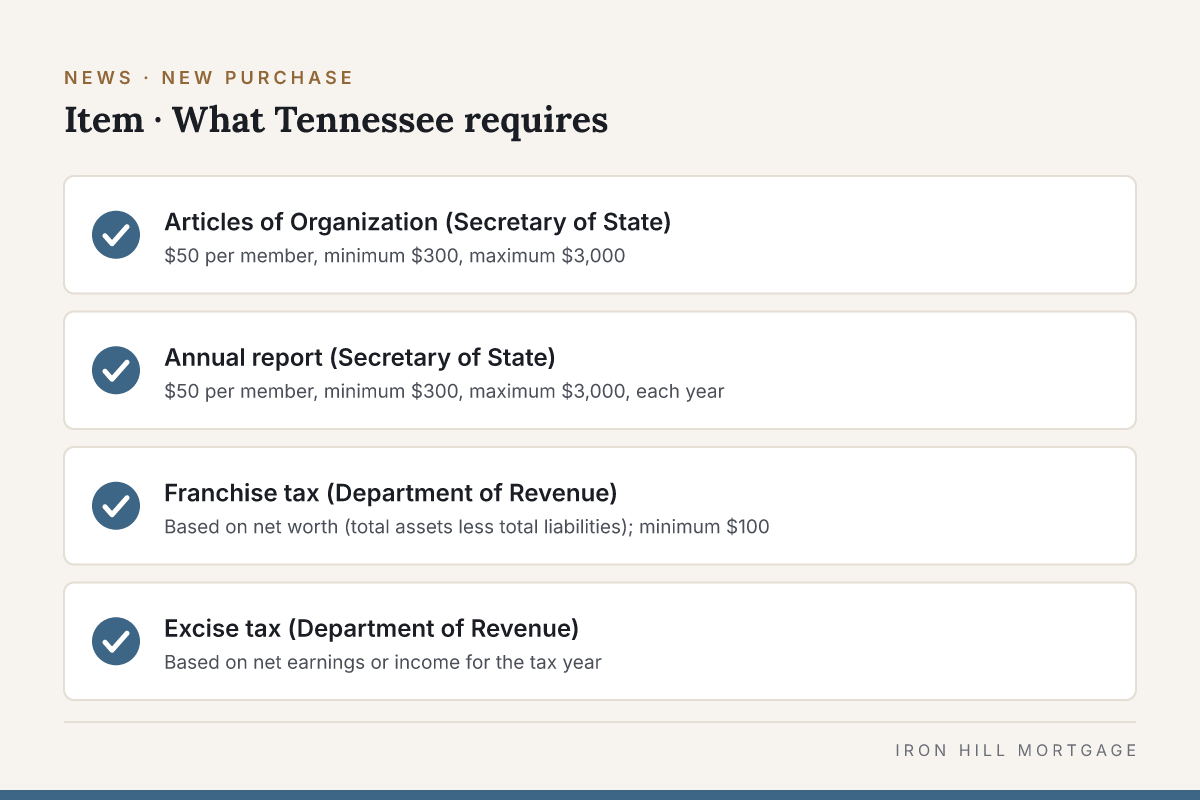
What Tennessee charges an LLC that owns a rental
| Item | What Tennessee requires |
|---|---|
| Articles of Organization (Secretary of State) | $50 per member, minimum $300, maximum $3,000 |
| Annual report (Secretary of State) | $50 per member, minimum $300, maximum $3,000, each year |
| Franchise tax (Department of Revenue) | Based on net worth (total assets less total liabilities); minimum $100 |
| Excise tax (Department of Revenue) | Based on net earnings or income for the tax year |
Sources: Tennessee Secretary of State, Articles of Organization form SS-4270; Tenn. Code Ann. § 48-249-1007; Tennessee Department of Revenue, Franchise & Excise Tax.
The Department of Revenue says limited liability companies registered in Tennessee or doing business in the state must register for and pay franchise and excise taxes. The $100 minimum franchise tax applies whether the company is active or inactive, so a single-property LLC owes it even in a year with no rental income.
For a one- or two-member LLC, the state filing fee sits at the $300 minimum, both when the company is formed and with each annual report.
Questions to settle before closing
Investors weighing an LLC purchase generally sort out three things before an offer: whether the loan program they plan to use lends to an entity, whether the LLC needs to exist and be in good standing before closing, and who will sign a personal guarantee if the program requires one. A tax professional or attorney can address how the structure affects an investor's own tax and liability picture; this article is not tax or legal advice.
Investors who buy through a real estate agent can also point the agent to Iron Hill's page for agents and builders, which covers how the team keeps an investor's agent updated through closing.
Working on a Tennessee rental? Talk with an Iron Hill loan advisor: text Ashley at 615-949-4780 or book a time here. Iron Hill Mortgage | NMLS #1946451.
Business-purpose loans for investment property only. Not for personal, family or household use. Subject to approval. Equal Housing Opportunity.
Sources
- Fannie Mae Selling Guide, B2-2-01, "General Borrower Eligibility Requirements" (09/03/2025; accessed Oct. 30, 2026): https://selling-guide.fanniemae.com/sel/b2-2-01/general-borrower-eligibility-requirements
- Fannie Mae Selling Guide, B2-1.3-02, "Limited Cash-Out Refinance Transactions" (10/08/2025; accessed Oct. 30, 2026): https://selling-guide.fanniemae.com/sel/b2-1.3-02/limited-cash-out-refinance-transactions
- Tennessee Secretary of State, Articles of Organization, Limited Liability Company, form SS-4270 (accessed Oct. 30, 2026): https://sos-tn-gov-files.tnsosfiles.com/forms/ss-4270_0.pdf
- Tenn. Code Ann. § 48-249-1007, filing, service and copying fees (accessed Oct. 30, 2026): https://law.justia.com/codes/tennessee/title-48/limited-liability-companies/chapter-249/part-10/section-48-249-1007/
- Tennessee Department of Revenue, "Franchise & Excise Tax" (accessed Oct. 30, 2026): https://www.tn.gov/revenue/taxes/franchise---excise-tax.html